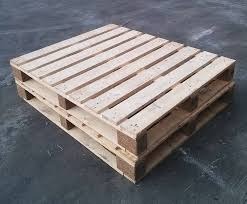
The Ultimate Guide to Building Your Own Wood Pallet
If you’ve ever walked through a warehouse, a loading dock, or a DIY shop, you’ve seen wood pallets everywhere. They’re the unsung heroes of logistics, moving everything from fresh produce to heavy machinery. But what if you could design and build your own pallets—tailoring them to the exact dimensions, strength, and aesthetics you need? In this guide, you’ll learn everything required to become a competent wood‑pallet builder, from choosing the right timber to mastering the joinery that keeps your pallets sturdy for years of service.
Why Build Your Own Pallet?
| Benefit | What It Means for You | Example |
|---|---|---|
| Cost Savings | Raw lumber is often cheaper than pre‑made pallets, especially when buying in bulk. | Buying 2 × 4s at $3 per board vs. $12 per pallet. |
| Customization | Tailor size, load rating, and style to fit unique equipment or storage spaces. | A 30‑inch‑wide pallet for a compact CNC router. |
| Sustainability | Use reclaimed wood or locally sourced timber, reducing carbon footprint. | Reusing old shipping crates to build a new pallet. |
| Skill Development | Learn joinery, finishing, and basic engineering principles. | Adding a “knock‑down” feature for easy transport. |
| Brand Identity | Paint or stamp your logo directly onto the pallet for a professional look. | A bespoke pallet for a boutique coffee roaster. |
If any of these advantages resonate with you, keep reading. By the end of this post you’ll be able to sketch a pallet plan, calculate material costs, and walk away with a finished product that meets industry standards.
1. Understanding Pallet Standards
Before you start sawing, it’s essential to grasp the two most common pallet standards:
| Standard | Typical Dimensions (L × W × H) | Load Capacity | Typical Use |
|---|---|---|---|
| GMA (Grocery Manufacturers Association) | 48 × 40 × 5 in (European) or 48 × 40 × 6 in (U.S.) | 1 500–2 500 lb | Grocery & retail |
| ISO (International Organization for Standardization) – EN 13698 | 800 × 1200 mm (31.5 × 47.2 in) | 1 000–3 000 lb | Global shipping |
| Custom | Any size you design | Determined by timber grade & design | Specialty equipment |
If you’re building pallets for personal projects (e.g., garden beds, furniture, or workshop storage), you can deviate from these standards, but keep in mind that forklift compatibility and shipping regulations may impose limits if you ever intend to use the pallets commercially.
2. Materials: Choosing the Right Wood
2.1. Timber Grades
| Grade | Description | Ideal Use |
|---|---|---|
| Select / #1 | Free of knots, high strength. | Heavy‑duty, high‑load pallets. |
| #2 (Construction) | Some knots, moderate strength. | General purpose, medium loads. |
| #3 (Utility) | More knots, lower strength. | Light loads, temporary storage. |
| Reclaimed / Recycled | Salvaged from old pallets or crates. | Sustainable builds, low‑budget projects. |
Tip: For outdoor or moisture‑prone environments, treat the wood with a water‑repellent preservative or opt for pressure‑treated lumber.
2.2. Common Cross‑Section Sizes
| Nominal Size | Actual Size | Typical Use in Pallet |
|---|---|---|
| 2 × 4 | 1.5 × 3.5 in | Stringers, deck boards |
| 2 × 6 | 1.5 × 5.5 in | Heavy‑duty deck boards |
| 4 × 4 | 3.5 × 3.5 in | Corner posts (rare) |
| 1 × 4 | 0.75 × 3.5 in | Slats (top surface) |
When you calculate material requirements, always add 5–10 % extra for waste and errors.
3. Tools & Equipment Checklist
| Tool | Purpose | Recommended Specs |
|---|---|---|
| Circular Saw / Table Saw | Cutting lumber to length | 7‑12 in blade, 24 V cordless preferred |
| Miter Saw | Precise cross‑cuts for slats | 12 in blade |
| Power Drill / Impact Driver | Driving screws, pre‑drilling | 1/4 in hex chuck |
| Countersink Bit | Flush screw heads | 1/8 in, 3‑flute |
| Carpenter’s Square | Checking right angles | 12 in |
| Tape Measure | Accurate dimensions | 25 ft steel |
| Clamps (C‑clamps or bar clamps) | Holding pieces while fastening | 6‑inch swing |
| Safety Gear (gloves, goggles, ear protection) | Personal protection | N/A |
| Optional: Nail Gun | Faster assembly (use with caution) | 23‑gauge pneumatic |
If you’re a first‑timer, start with a basic set (saw, drill, square, clamps). You can always add a nail gun or a pneumatic impact driver later.
4. Design Fundamentals
A typical four‑way entry pallet (the most common type) features:
- Two stringers (the long, bottom beams) running the length of the pallet.
- Three or four deck boards perpendicular to the stringers, creating the top surface.
- Nails or screws at each intersection, usually at least two per joint for load distribution.
4.1. Determining Load Capacity
The formula for a simple wooden pallet’s load capacity is:
[ \text{Capacity (lb)} = \frac{\text{Allowable Stress (psi)} \times \text{Section Modulus (in³)}}{\text{Safety Factor}} ]
- Allowable Stress depends on wood grade (e.g., 1 200 psi for #2 lumber).
- Section Modulus is calculated from the cross‑section dimensions of the stringer.
While most DIY builders don’t need exact calculations, using a safety factor of 3–4 provides a generous margin.
4.2. Sample Pallet Layout
Below is a quick visual representation (text‑based) of a 48 × 40 in pallet built with 2 × 4 stringers and 1 × 4 deck boards.
Top View (48" L × 40" W)

   ────────────────────────────────────────
   |   |   |   |   |   |   |   |   |   |   |
   |---|---|---|---|---|---|---|---|---|---|
   |   |   |   |   |   |   |   |   |   |   |
   ────────────────────────────────────────
   (2 × 4 stringers on the sides, 1 × 4 slats spaced 3.5")
- Stringer length: 48 in (full pallet length).
- Deck board spacing: 3.5 in (center‑to‑center, standard for 1 × 4).
5. Step‑by‑Step Build Process
Step 1 – Plan & Cut
- Sketch the pallet on graph paper (1 in = 1 ft).
- Mark each piece (stringers, deck boards, optional corner blocks).
- Cut all lumber to length, adding a 1/8‑in allowance for saw blade width.
Step 2 – Prep the Wood
- Remove any splinters, sand rough edges, and apply a coat of wood preservative if the pallet will be exposed to moisture.
- Pre‑drill holes (⅜‑in pilot) at each joint to prevent splitting. Space the holes ½ in from the edge and 2 in apart along the stringer.
Step 3 – Assemble the Base
- Lay the two stringers parallel on the workbench, spaced 40 in apart (center‑to‑center).
- Position the first deck board at the front, flush with the stringer ends.
- Using a countersink bit, drive two 3‑in wood screws through the deck board into each stringer (four screws total).
Repeat for the remaining deck boards, maintaining a 3.5‑in spacing (center‑to‑center).
Pro Tip: Use clamps to hold the deck board tight against the stringer while you screw—this eliminates wobble and ensures a square connection.
Step 4 – Add Reinforcement (Optional)
- Corner blocks: Cut small 2 × 2 pieces and attach them at each corner for extra shear strength.
- Cross‑bracing: Install a short 2 × 4 piece midway between the stringers, perpendicular to the deck boards, to prevent racking under heavy loads.
Step 5 – Finish
- Sand any rough edges for safety.
- Apply a protective finish (polyurethane, oil, or exterior-grade paint).
- Stamp or paint your logo if this pallet represents a brand.
6. Cost Breakdown (Example: 48 × 40 in Pallet)
| Item | Quantity | Unit Cost | Total |
|---|---|---|---|
| 2 × 4 lumber (48 in) | 2 | $3.00 | $6.00 |
| 1 × 4 lumber (40 in) | 4 | $2.20 | $8.80 |
| 3‑in wood screws (100 pcs) | 1 box | $8.00 | $8.00 |
| Wood preservative (quart) | 0.5 qt | $12.00 | $6.00 |
| Sandpaper (assorted) | 1 pack | $3.00 | $3.00 |
| Total Material Cost | — | — | $31.80 |
| Labor (2 hr @ $20/hr) | — | — | $40.00 |
| Grand Total | — | — | $71.80 |
Even with modest labor rates, a single custom pallet costs under $80—significantly less than the $120–$150 price tag of a new, brand‑new GMA pallet.
7. Common Mistakes & How to Avoid Them
| Mistake | Consequence | Fix |
|---|---|---|
| Driving screws without pre‑drilling | Wood splits, joints weaken. | Always pilot‑drill ⅜‑in holes. |
| Using low‑grade timber for heavy loads | Pallet collapses under weight. | Choose at least #2 lumber for >1 500 lb capacity. |
| Uneven spacing of deck boards | Forklifts may snag, load distribution uneven. | Use a spacer (3.5 in for 1 × 4) and a square. |
| Neglecting finish on outdoor pallets | Rot, insect damage, reduced lifespan. | Apply preservative and re‑coat annually. |
| Not accounting for forklift entry | Forks cannot get under pallet, causing handling issues. | Keep the underside clear of obstructions; maintain standard clearance (≈3 in). |
8. When to Choose a Knock‑Down (KD) Pallet
A knock‑down pallet is designed to be disassembled, shipped flat, and re‑assembled at the destination. Benefits include:
- Reduced shipping volume (up to 30 % less).
- Lower storage space in warehouses.
- Easy repair – replace a damaged board without discarding the whole pallet.
If you anticipate frequent transport of the pallets themselves, consider a KD design using bolt‑through hardware (carriage bolts, washers, and lock nuts) instead of permanent screws.
Frequently Asked Questions
Q1: What is the minimum wood thickness needed for a pallet that will carry 2 000 lb?
A: For a standard four‑way entry pallet, a 2 × 4 stringer (1.5 × 3.5 in) made from #2 grade lumber typically supports up to 2 500 lb when the deck boards are properly spaced and the joints are screwed with 3‑in wood screws. If you anticipate higher loads, upgrade to 2 × 6 stringers or use a higher grade (Select).
Q2: Can I use reclaimed pallets as raw material for my own pallets?
A: Absolutely—reclaimed pallets are a sustainable source of lumber. Inspect each board for rot, cracks, or heavy nail holes. Remove any nails with a pneumatic nail puller, sand rough edges, and treat the wood before use.
Q3: How many screws should I use per joint?
A: The industry standard is two screws per board‑to‑stringer intersection (four total per deck board). Space them about 2 in apart, centered along the board width, and countersink them to avoid snagging.
Q4: Do I need to certify my pallets for commercial shipping?
A: If you intend to ship internationally, you may need ISPM 15 compliance (heat‑treated or fumigated wood) and a phytosanitary certificate. For domestic use, certification isn’t mandatory, but labeling (“Made in House”) can help with warehouse acceptance.
Q5: What tools can I use if I don’t have a power drill?
A: A hand brace with a ¼‑in bit works for pilot holes, and a ratchet screwdriver can drive the screws. It’ll be slower, but the quality of the pallet won’t suffer.
Q6: How often should I re‑apply a protective finish?
A: For outdoor pallets, re‑coat every 12–18 months or after any visible wear. Indoor pallets can go longer—typically 3–5 years—unless they’re exposed to chemicals or heavy moisture.
Q7: Can I design a pallet with a non‑rectangular shape?
A: Yes! Pallets can be circular, triangular, or even custom‑shaped to fit unique equipment. The key is maintaining even load distribution and ensuring forklift compatibility (i.e., accessible entry points).
9. Next Steps – Put Your Skills to the Test
- Pick a project: Start with a simple 48 × 40 in pallet for garden tools.
- Gather materials: Visit your local lumberyard, ask for surplus 2 × 4 and 1 × 4 boards.
- Lay out a workspace: A sturdy workbench, clamps, and a clean floor are essential.
- Follow the step‑by‑step guide above, checking each joint with a carpenter’s square.
- Document your build: Take photos, note any adjustments, and share them on a DIY forum—feedback helps you refine your technique.
Building your own pallets is more than a cost‑saving hack; it’s an entry point into basic structural design and sustainable manufacturing. With the knowledge you’ve gained here, you can now confidently craft pallets that meet your exact needs—whether for a backyard workshop, a small‑scale e‑commerce operation, or a bespoke product line.
Happy building, and may your pallets always bear the load gracefully!