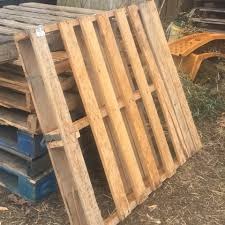
How to Build Your Own Pallets: A Step‑by‑Step Guide
Building Pallets. Whether you run a small warehouse, a DIY e‑commerce shop, or you simply need a sturdy platform for a garden project, building your own pallets can save you money, give you full control over dimensions, and let you recycle otherwise waste wood. In this post you’ll learn everything you need to know to design, cut, and assemble a reliable pallet from start to finish. Building Pallets.
1. Why Build Your Own Pallets?
| Benefit | Explanation |
|---|---|
| Cost savings | A standard 48 × 40‑in. hardwood pallet can cost $12‑$20. Using reclaimed lumber you can drop the price to under $5 per pallet. |
| Custom dimensions | Store‑specific shelf heights or unusual load sizes often don’t fit standard pallets. Building them yourself lets you match exact measurements. |
| Eco‑friendly | Up‑cycling pallets, pallets from demolition sites, or off‑cuts reduces landfill waste and your carbon footprint. |
| Quality control | You can choose the wood species, nail type, and finish, ensuring the pallet can handle the exact weight and environmental conditions you need. |
| Skill development | Learning to cut, nail, and finish wood expands your workshop capabilities for future projects. |
If any of these reasons resonate with you, keep reading—by the end you’ll be ready to produce pallets that are sturdy, safe, and perfectly sized for your needs.
2. Planning Your Pallet
Before you reach for the saw, sketch a quick plan. The two most common pallet styles are stringer pallets (three long boards that run the length) and block pallets (a grid of short blocks).
| Feature | Stringer Pallet | Block Pallet |
|---|---|---|
| Load capacity | 1,200–2,500 lb (depends on wood) | 1,500–3,000 lb (more evenly distributed) |
| Materials used | 3 long stringers + 4‑7 deck boards | 5‑9 blocks + 4‑6 deck boards |
| Ease of repair | Simple – replace a single stringer | Slightly harder – must locate the exact block |
| Space between boards | Small gaps (good for stability) | Larger gaps (better airflow) |
| Typical cost | $4–$7 per pallet (reclaimed wood) | $5–$9 per pallet (reclaimed wood) |
Pick a style based on the load you’ll carry and the environment. For most indoor storage, a stringer pallet is easiest to build; for outdoor or high‑humidity settings, a block pallet offers better ventilation.
2.1 Determine Key Dimensions
Standard pallets in North America measure 48 × 40 in. (1200 × 1000 mm). However, you can customize any of these numbers:
| Parameter | Typical Range | When to adjust |
|---|---|---|
| Length (L) | 36–48 in. (914–1219 mm) | If aisle width or rack depth differs |
| Width (W) | 30–48 in. (762–1219 mm) | To match shelf spacing |
| Deck board thickness | ¾–1 ¼ in. (19–32 mm) | Heavy loads → thicker boards |
| Stringer/block thickness | 1 ½–2 in. (38–51 mm) | Heavy loads or repeated lifts |
| Gap between deck boards | ½–¾ in. (13–19 mm) | Want airflow → larger gap |
Make a quick table for your own project to keep dimensions straight:
| Component | Length | Width | Thickness |
|---|---|---|---|
| Deck board | 48 in. | 4 in. | 1 in. |
| Stringer / Block | 48 in. | 2 in. | 1 ½ in. |
| Top rail (optional) | 48 in. | 1 in. | 1 in. |
3. Gather Materials & Tools
3.1 Materials Checklist
| Item | Qty (per pallet) | Notes |
|---|---|---|
| Hardwood or soft‑wood boards (deck) | 4‑6 (48 × 4 in.) | Reclaimed pallet wood, pine, or oak |
| Stringers (if using stringer design) | 3 (48 × 2 in.) | Choose strong, straight grain |
| Blocks (if using block design) | 6‑9 (12 × 12 in.) | 2 × 4s cut to length |
| Nails or screws | 30‑40 ½‑in. nails or 1½‑in. deck screws | Nails give flexibility; screws hold tighter under vibration |
| Wood glue (optional) | 1 qt | Increases shear strength |
| Protective finish | 1 qt (oil, polyurethane, or marine varnish) | Extends lifespan, especially outdoors |
| Edge banding (optional) | 1 strip per pallet | Prevents splinters and adds aesthetic value |
3.2 Tools Checklist
| Tool | Why you need it |
|---|---|
| Circular saw or miter saw | Accurate cuts to length |
| Table saw (optional) | Rip boards to exact width |
| Measuring tape & ruler | Verify dimensions |
| Carpenter’s square | Keep cuts 90° |
| Hammer or nail gun | Drive nails efficiently |
| Drill/driver (if using screws) | Pre‑drill pilot holes to avoid splitting |
| Chisel & mallet | Remove any splinters or adjust fit |
| Safety gear (gloves, goggles, ear protection) | Protect yourself from debris and noise |
| Sandpaper or orbital sander | Smooth rough edges before finishing |
4. Step‑by‑Step Build Process
Below is a concise, numbered workflow you can follow on the shop floor. Feel free to pause at any stage and double‑check measurements.
4.1 Prep the Lumber
- Inspect each board for cracks, rot, or large knots. Discard any compromised pieces.
- Measure and mark the cut lines using a pencil and a carpenter’s square.
- Cut the deck boards to the chosen length (usually 48 in.) and rip them to the desired width (4 in. is common).
- Trim the stringers/blocks to length. If you’re using a block pallet, cut the 2 × 4s into 12‑in. sections, then trim each to the final width (2 in.).
- Sand all cut edges and the face of each board to remove splinters. A 120‑grit sheet is sufficient for most hardwoods.
4.2 Layout the Frame
- Stringer design: Lay three stringers parallel on the ground, spaced evenly (usually 12‑in. from each outer edge).
- Block design: Arrange blocks in a staggered grid: two rows of three blocks each for a 48 × 40‑in. pallet, leaving a ½‑in. gap between blocks.
Tip: Use a scrap piece of wood as a “spacer” to keep the gaps uniform while you nail the deck boards.
4.3 Attach the Deck Boards
- Place the first deck board on top of the frame, aligning the edge flush with the outer stringer or block.
- Pre‑drill two pilot holes (about ¾ in. from each end) to prevent splitting.
- Fasten with two nails or screws per end. If you’re using nails, a ½‑in. finish nail works well; for screws, a #8 deck screw offers better hold.
- Repeat for the remaining deck boards, maintaining the chosen gap (½‑in. is typical).
Pro tip: Apply a thin bead of wood glue between the board and the frame before nailing. This dramatically increases shear strength without compromising the ability to disassemble later.
4.4 Reinforce the Structure
- Cross‑bracing (optional): Install a short 2 × 4 brace between the two outer stringers near the center of the pallet. This limits flex under heavy loads.
- Top rail (optional): Add a 1‑in. wide strip along the front edge to protect the pallet’s face when handling with forklifts.
Secure any additional braces with two nails or screws at each end.
4.5 Finish
- Clean the pallet with a brush to remove dust.
- Apply a finish of your choice:
- Oil (e.g., linseed or tung) penetrates the wood, offering moderate protection and a natural look.
- Polyurethane creates a hard, water‑resistant surface—ideal for outdoor or wet environments.
- Marine varnish is the most durable for constant exposure to rain or salt air.
- Allow the finish to dry completely (follow the manufacturer’s cure time, typically 24‑48 hours).
Your pallet is now ready for use! Store it flat in a dry area until you need it, or load it directly onto a forklift if you built it on site.
5. Safety & Maintenance Checklist
| Task | Frequency | Why it matters |
|---|---|---|
| Inspect nails/screws for loosening | Every 3 months (or after each heavy lift) | Prevent board separation under load |
| Check for splintered or cracked boards | Every 6 months | Avoid hidden structural failures |
| Re‑apply finish | Annually (outdoor) or every 2‑3 years (indoor) | Preserve wood integrity against moisture |
| Clean debris and oil spills | After each use | Reduces slip risk and wood degradation |
| Store pallets off the ground | Whenever possible | Prevents moisture wicking and rot |
6. Common Mistakes and How to Avoid Them
| Mistake | Consequence | Solution |
|---|---|---|
| Using soft‑wood for heavy loads | Boards compress or split | Choose hardwood (oak, maple) or reinforce with thicker stringers |
| Driving nails too close to the edge | Splitting | Keep nails at least ¼ in. from the board edge |
| Uneven gaps between deck boards | Load shifting, unstable pallet | Use spacers or a jig to keep gaps consistent |
| Skipping pre‑drilling for screws | Stripped wood, reduced load capacity | Always pre‑drill pilot holes for screws ≥ 1½ in. |
| Ignoring wood moisture content | Warping over time | Let reclaimed wood air‑dry for at least 48 hours before use |
7. Cost Estimate (Sample)
Below is a quick budget breakdown for a 48 × 40‑in. stringer pallet built from reclaimed pine. Prices are approximate and will vary by region.
| Item | Quantity | Unit Cost | Total |
|---|---|---|---|
| Reclaimed pine boards (deck) | 5 × 48 × 4 in. | $1.20 each | $6.00 |
| Stringers (2 × 4, 48 in.) | 3 | $0.90 each | $2.70 |
| ½‑in. finish nails (box) | 1 | $3.00 | $3.00 |
| Wood glue (quart) | 0.1 qt | $7.00 per qt | $0.70 |
| Oil finish (quart) | 0.05 qt | $12.00 per qt | $0.60 |
| Subtotal | $13.00 | ||
| Labor (2 hrs @ $15/hr) | $30.00 | ||
| Total per pallet | $43.00 |
If you already own tools and have free reclaimed wood, the material cost can dip below $5 per pallet, showcasing the economic advantage of DIY.
8. Frequently Asked Questions
Q1: Can I use a standard drywall screw instead of a deck screw?
A: Drywall screws are brittle and can snap under load. Deck screws (or galvanized wood screws) are designed for structural connections and provide the required shear strength.
Q2: How much weight can a DIY pallet hold?
A: It depends on wood species, board thickness, and design. A well‑built stringer pallet from 1 ½‑in. hardwood stringers and 1‑in. deck boards typically holds 1,500–2,000 lb evenly distributed.
Q3: Do I need to treat the pallet for insects?
A: If you plan to store the pallet outdoors or in a damp environment, applying an insect‑resistant finish (e.g., a borate solution) before sealing with oil or varnish helps deter termites and carpenter ants.
Q4: What’s the difference between a “heat‑treated” pallet and a DIY pallet?
A: Heat‑treated pallets meet ISPM 15 standards for international shipping, meaning they’ve been heated to 56 °C for at least 30 minutes to kill pests. DIY pallets don’t have this certification, so avoid using them for cross‑border shipments.
Q5: Can I build a pallet with a different shape—like a circle or hexagon?
A: Absolutely! The same principles apply: design a frame that distributes load evenly, use adequate fasteners, and keep gaps small. However, non‑rectangular pallets are harder to handle with standard forklifts, so consider your handling equipment first.
Q6: Is it okay to reuse a pallet that has been previously painted?
A: Yes, but you should sand or strip the old finish to expose fresh wood before applying a new coat. This ensures the new finish adheres properly and doesn’t trap moisture.
Q7: How do I know if my pallet is level?
A: Place a carpenter’s level across the deck boards. If it reads within ±0.5 mm across the entire surface, the pallet is level. Uneven boards may indicate a mis‑aligned stringer or a warped deck board.
9. Wrap‑Up: Your Next Steps
- Audit the wood you have – Do you have enough reclaimed pallets, lumber from a demolition site, or will you purchase fresh boards?
- Decide on a design – Stringer for simplicity, block for ventilation. Sketch it out on graph paper.
- Gather tools and safety gear – A well‑organized workspace will cut build time dramatically.
- Follow the step‑by‑step guide – Measure twice, cut once, and always pre‑drill before screwing.
- Finish and maintain – A protective coating is the final barrier against the elements and wear.
By investing a few hours and a modest amount of material, you’ll end up with pallets that are cheaper, stronger, and customized to your exact workflow. Plus, you’ll have the satisfaction of turning discarded wood into a functional, load‑bearing platform.
Now, grab that saw, set up your workspace, and start building pallets that work for you. Happy woodworking!