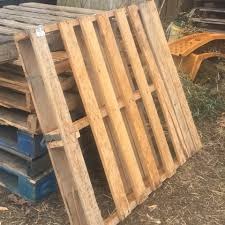
The Ultimate Guide to Pallet Work: Everything You Need to Know
Pallets are the unsung heroes of modern logistics. From the moment a raw material leaves the supplier to the instant a finished product reaches the customer’s doorstep, pallets are doing the heavy lifting—literally. If you’ve ever wondered how to choose the right pallet, operate the equipment safely, or extend the life of your wooden crates, this guide is for you.
Table of Contents
- What Is a Pallet?
- Common Pallet Types & Materials
- Standard Pallet Sizes (Global Snapshot)
- Choosing the Right Pallet for Your Business
- Key Equipment for Pallet Work
- Safety First: Best Practices on the Warehouse Floor
- Maintenance, Repair, and Recycling (MRR)
- Cost Considerations & ROI
- FAQ
1. What Is a Pallet?
A pallet is a flat, portable platform used to transport, store, and protect goods throughout the supply chain. By providing a stable base that can be lifted with forklifts, pallet jacks, or automated guided vehicles (AGVs), pallets eliminate the need for manual handling of individual boxes, dramatically reducing labor costs and injury risks.
Key Benefits
| Benefit | Why It Matters |
|---|---|
| Efficiency | Faster loading/unloading, higher throughput |
| Safety | Reduces manual lifting, decreasing back injuries |
| Stackability | Maximizes cubic space in trucks and warehouses |
| Standardization | Facilitates consistent handling across all partners |
2. Common Pallet Types & Materials
| Material | Typical Uses | Pros | Cons |
|---|---|---|---|
| Wood | General freight, bulk goods, one‑off shipments | Inexpensive, easy to repair, recyclable | Susceptible to moisture, splinters, weight limits |
| Plastic | Food, pharma, high‑hygiene environments | Clean, resistant to chemicals, durable | Higher upfront cost, can be slippery |
| Metal (Steel/Aluminum) | Heavy machinery, automotive parts | Extremely strong, fire‑resistant | Heavy, expensive, can rust (steel) |
| Press‑board/Composite | Light parcels, e‑commerce | Lightweight, recyclable, low cost | Lower load capacity, not ideal for moisture |
Choosing the Right Material
- Food & pharma: Opt for food‑grade plastic or stainless steel to meet hygiene standards.
- Heavy equipment: Steel or reinforced wood pallets are preferred.
- Sustainability‑focused companies: Re‑usable plastic or certified FSC wood may align with ESG goals.
3. Standard Pallet Sizes (Global Snapshot)
While exact dimensions can vary regionally, the table below captures the most common standards that dominate international trade.
| Region | Standard Size (mm) | ISO Code | Typical Load Capacity |
|---|---|---|---|
| North America (U.S./Canada) | 1,016 × 1,219 (40 × 48 in) | GMA 1 | 1,000 – 2,500 kg |
| Europe | 1,200 × 800 (48 × 31.5 in) | EUR 1 | 1,500 – 2,200 kg |
| Australia | 1,165 × 1,165 (45.9 × 45.9 in) | AU 1 | 1,200 – 2,000 kg |
| Asia (Japan) | 1,100 × 1,100 (43.3 × 43.3 in) | JIS 1 | 1,000 – 1,500 kg |
| International (ISO 6780) | 1,200 × 1,000 (48 × 40 in) | ISO 1 | 1,200 – 2,500 kg |
Tip: When shipping internationally, always confirm the recipient’s pallet specifications to avoid costly repacking.
4. Choosing the Right Pallet for Your Business
4.1 Assess Your Load Profile
- Weight: Verify the maximum static load (when the pallet is stationary) and dynamic load (when in motion).
- Dimensions: Does the product exceed standard pallet dimensions? Oversized items may need custom pallets.
- Environment: Exposure to moisture, chemicals, temperature extremes, or hygiene regulations drastically influences material choice.
4.2 Calculate Total Cost of Ownership (TCO)
| Cost Component | Example Calculation |
|---|---|
| Purchase price | $12 per wooden pallet vs. $30 per plastic pallet |
| Lifecycle (uses) | Wood: 50‑70 cycles; Plastic: 500+ cycles |
| Repair/maintenance | Nail replacement = $0.20/pallet; Plastic cleaning = $0.05/pallet |
| Disposal/recycling | Wood scrap value = $0.03 /kg; Plastic resale = $0.10 /kg |
TCO FormulaTCO = (Purchase Price + (Repair Cost × Expected Uses) – Resale Value) / Expected Uses
Running the numbers often reveals that a higher‑priced plastic pallet can be cheaper over five years, especially for high‑volume operations.
4.3 ESG Considerations
- Certified Sustainable Wood: Look for FSC or PEFC stamps.
- Closed‑Loop Plastic Programs: Many suppliers offer take‑back schemes, turning end‑of‑life pallets into new products.
- Carbon Footprint: Life‑cycle analysis (LCA) tools can quantify CO₂ emissions per pallet type, helping you meet corporate sustainability targets.
5. Key Equipment for Pallet Work
| Equipment | Typical Load Capacity | Ideal For | Pros | Cons |
|---|---|---|---|---|
| Counterbalance Forklift | 2 – 5 t | Heavy pallets, high stacks | Versatile, strong | Larger footprint, higher maintenance |
| Pallet Jack (Manual) | 1 – 2 t | Light to medium loads, short distances | Low cost, easy to maneuver | Requires physical effort |
| Electric Pallet Truck | 1 – 2 t | Indoor logistics, high‑frequency moves | Lower operator fatigue, precise | Battery management required |
| Reach Stacker | 1 – 3 t | Container handling, narrow aisles | High reach, excellent for ports | Expensive, complex training |
| Automated Guided Vehicle (AGV) | 0.5 – 2 t | High‑volume, repetitive routes | Labor‑free, data integration | High capital outlay, requires layout redesign |
Selecting the Right Equipment
- Volume & Velocity: If you move >10,000 pallets/month, automation pays off quickly.
- Aisle Width: Narrow‑aisle forklifts can cut warehouse footprint by up to 20 %.
- Operator Skill: Electric pallet trucks reduce training time compared to heavy‑duty forklifts.
6. Safety First: Best Practices on the Warehouse Floor
| Safety Issue | Preventive Action |
|---|---|
| Tip‑over accidents | Keep load centre of gravity ≤ 50 % of pallet width; use load‑balancing techniques. |
| Pallet damage (splinters, cracks) | Inspect pallets on receipt; discard any with broken boards or loose nails. |
| Forklift collisions | Implement a speed‑limit zone and install reflective tape on pallet edges for better visibility. |
| Manual handling injuries | Enforce a “no‑lifting” policy for pallets over 25 kg; use pallet jacks instead. |
| Slipping on wet pallets | Store pallets on raised platforms; use non‑slip mats in damp zones. |
6.1 Inspection Checklist (Daily)
- Visual check – Look for broken boards, protruding nails, and moisture damage.
- Weight verification – Confirm the pallet’s load does not exceed its rating.
- Stability test – Gently rock the pallet; excessive wobble indicates structural weakness.
Documentation: Keep a digital log (e.g., using a tablet) of any pallet that fails inspection. This data can feed predictive maintenance models.
7. Maintenance, Repair, and Recycling (MRR)
7.1 Repair Techniques for Wood Pallets
| Issue | Repair Method | Approx. Cost |
|---|---|---|
| Loose nail | Re‑nail with 2‑inch smooth nail | $0.05 per nail |
| Split board | Glue + clamp, then replace if >1 cm | $0.20 per board |
| Cracked corner | Reinforce with metal corner bracket | $0.15 per bracket |
7.2 Plastic Pallet Refurbishment
- Hot‑wash cleaning to remove residues (cost ≈ $0.10/pallet).
- UV‑inspection for cracks; replace only if structural integrity compromised.
7.3 Recycling Options
| Pallet Type | Recycling Pathway | Revenue Potential |
|---|---|---|
| Wood | Chipping for mulch or particleboard | $0.02 /kg |
| Plastic | Melt‑down for new pallets or containers | $0.08 /kg |
| Metal | Scrap metal yards (steel) | $0.20 /kg |
Closed‑Loop Example: A mid‑size distributor in the Midwest runs a 3‑year pilot where used plastic pallets are collected, cleaned, and re‑injected into new pallets. The program cut pallet procurement spend by 22 % and earned $12,000 in scrap revenue.
8. Cost Considerations & ROI
Below is a simplified cost‑comparison model for a 100,000‑pallet‑per‑year operation over a three‑year horizon.
| Pallet Type | Purchase Price | Avg. Life (cycles) | Repair Cost per Cycle | Disposal Cost | 3‑Year Total Cost |
|---|---|---|---|---|---|
| Wood (standard 48×40) | $12 | 70 | $0.20 | $0.03 | $1,714,500 |
| Plastic (re‑usable) | $30 | 500 | $0.05 | $0.01 | $1,860,000 |
| Metal (steel) | $45 | 800 | $0.03 | $0.00 | $2,025,000 |
Assumptions: 10 % annual inflation, 5 % discount rate.
Interpretation: While wood remains cheapest in raw cost, the total cost gap narrows once you factor in repairs, disposal, and the labor saved from fewer pallet replacements. For high‑volume, high‑speed environments, plastic’s longer life often justifies its premium.
8.1 Calculating ROI on Automation
If an AGV system costs $250,000 and reduces manual pallet moves from 120,000 to 30,000 per year, with a labor cost of $18/hour (0.5 hour per move), the payback period is:
- Labor savings: (120,000 – 30,000) × 0.5 h × $18 = $810,000 per year
- Payback: $250,000 ÷ $810,000 ≈ 0.31 years (≈ 4 months)
Thus, a well‑designed automation program can deliver rapid ROI.
9. Frequently Asked Questions
| Question | Answer |
|---|---|
| What is the most common pallet size in the U.S.? | The 48 × 40 in (1,016 × 1,219 mm) GMA pallet, often called the “standard North American pallet.” |
| Can I reuse damaged wooden pallets? | Minor damage (e.g., loose nails) can be repaired. However, splintered or rot‑affected boards should be discarded for safety. |
| Are plastic pallets recyclable? | Yes. Most food‑grade plastics (HDPE, PP) are accepted at municipal recycling facilities and can be re‑melted into new pallets. |
| How often should I inspect pallets? | At a minimum, conduct daily visual checks. For high‑value or regulated goods, perform weekly detailed inspections. |
| Do I need special training for operating a reach stacker? | Absolutely. Reach stackers require a forklift license plus specific training on the device’s extended reach and load‑centering procedures. |
| Is there a “green” pallet option? | Certified sustainably sourced wood (FSC/PEFC) and reusable plastic pallets both qualify, depending on your ESG priorities. |
| What’s the best way to reduce pallet damage during transport? | Secure loads with stretch wrap or strapping, keep pallets on level surfaces, and avoid over‑stacking beyond the pallet’s rated height (usually 1.5 – 2 m). |
| How can I track pallet usage? | RFID tags or QR codes linked to a warehouse management system (WMS) provide real‑time visibility of each pallet’s location and lifecycle. |
Closing Thoughts
Pallet work may seem like a simple, behind‑the‑scenes activity, but its impact ripples through every stage of the supply chain. By understanding the different pallet types, standard dimensions, equipment options, and safety protocols, you can make data‑driven decisions that boost efficiency, lower costs, and align with sustainability goals.
Remember: the right pallet is not just a platform—it’s a strategic asset. Treat it as such, invest in proper inspection and maintenance, and leverage technology (RFID, automation, analytics) to unlock its full potential. Your warehouse floor will run smoother, your employees will stay safer, and your bottom line will thank you.