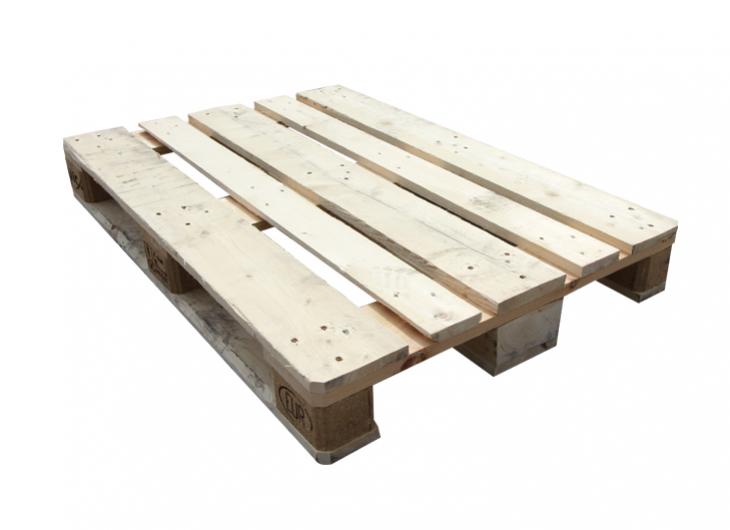
The Mighty Mini: Why the 800×600 Half Euro Pallet is Your Secret Weapon for Retail Logistics
If you’re managing a supply chain, you know that efficiency isn’t just about moving goods—it’s about moving them smartly. You’re constantly battling for space, seeking ways to optimize loads, reduce costs, and accelerate shelf readiness.
While the massive 1200×800 mm Euro Pallet (EUR 1) is the undisputed heavyweight champion of European logistics, sometimes, you don’t need a heavy hitter; you need a nimble, flexible solution that can navigate tight retail aisles and high-density storage areas.
Enter the Half Euro Pallet.
Measuring precisely 800 x 600 mm, this efficient workhorse is exactly half the size of its standard counterpart, making it perhaps the most underestimated tool in modern retail logistics. If you haven’t yet mastered the utilization of the half pallet, you might be leaving significant efficiency and cost savings on the table.
Let’s dive into why the 800×600 mm pallet—often known affectionately as the ‘Half Pallet’ or sometimes the ‘Dusseldorf Pallet’ (when referring to specific pooled versions)—is the perfect fit for your specialized logistical challenges.
What Exactly is the 800×600 mm Half Euro Pallet?
The Half Euro Pallet is designed for seamless integration within the established European standardization system. Its dimensions (800 mm long by 600 mm wide) are intentionally derived from the standard Euro Pallet (1200×800 mm).
The Math of Efficiency:
- Two Half Pallets placed side-by-side fit perfectly onto a standard 1200×800 mm space.
- Four Half Pallets fit perfectly onto a standard 1200×1000 mm industrial pallet space.
This modularity is crucial. It means you can manage smaller, more fragmented loads without wasting space during transportation in standard trucks or containers, since the units still cube out efficiently when grouped.
Typically constructed from wood (though plastic versions are gaining popularity, especially in closed loops), the Half Pallet is built to be robust, offering the same four-way entry as the full-size version, allowing easy handling by forklifts and pallet jacks from all sides.
Why Go Half? The Core Benefits for Your Supply Chain
Choosing the Half Pallet isn’t just a downgrade in size; it’s an upgrade in flexibility and specialization.
1. Mastering the Last Mile and Retail Readiness
The biggest advantage for you if you deal with consumer goods is the pallet’s sheer adaptability in the retail environment.
- Aisle Navigation: Standard pallets often block aisles and require specialized equipment to position. The 600 mm width of the Half Pallet allows it to be easily maneuvered through standard store doorways and narrow aisles, right up to the point of display.
- Point-of-Sale (POS) Integration: These pallets are designed to be “retail-ready.” Products can be grouped and shipped directly on the half pallet, which then acts as a ready-made floor or end-cap display. This drastically reduces stocking time and labor costs for retailers—a massive selling point for your product.
- Less Product Handling: By minimizing the number of times individual items need to be touched, you reduce the risk of damage, speed up rotation, and ensure quicker restocking cycles.
2. Space Optimization in High-Density Storage
If your inventory includes items with high turnover but lower volume (like certain pharmaceuticals, specialty foods, or promotional displays), the Half Pallet prevents you from dedicating valuable 1200×800 footprints to small loads.
In a warehouse, two half pallets can be stacked in a single rack opening, or they can be combined with a standard pallet to maximize floor coverage in a trailer. This ability to mix and match sizes ensures that every square inch of your storage and transport space works harder.
3. Reduced Material and Transport Costs
While two Half Pallets naturally take up the same space as one full pallet, using the smaller format often saves you money in packaging and material handling:
- Packaging Savings: You might not need as much secondary packaging (shrink wrap, corner boards) for smaller load sizes.
- Flexibility in Shipment Size: If a customer orders a quantity that only fills half a full pallet, shipping it on a dedicated Half Pallet means you don’t pay for the unused air and space of a larger pallet footprint.
Pallet Specifications: Half vs. Full
To truly understand how the 800×600 mm pallet fits into your operations, let’s look at the technical details side-by-side with the standard size.
Table 1: Key Specifications of the Half Euro Pallet (800×600 mm)
| Specification | Typical Measurement (Wood) | Importance for You |
|---|---|---|
| Dimensions (L x W) | 800 mm x 600 mm | Ideal for narrow spaces and retail displays. |
| Height | Approx. 144 mm (Standardized) | Ensures compatibility with most handling equipment. |
| Tare Weight | 9 – 14 kg (Depends on material/construction) | Lightweight for manual handling in stores. |
| Dynamic Load Capacity | Up to 500 – 750 kg | Sufficient for most retail-ready packaged goods. |
| Static Load Capacity | Up to 1,500 – 2,000 kg | Allows for safe stacking in warehouses. |
| Entry Type | 4-way (Forklift & Pallet Jack) | Maximum maneuverability in tight corners. |
Table 2: Comparative Dimensions (The Modular Advantage)
| Pallet Type | Dimensions (L x W) | Relationship to Standard EUR 1 | Primary Use Case |
|---|---|---|---|
| Standard Euro Pallet (EUR 1) | 1200 x 800 mm | The Base Unit (100%) | General transport, heavy loads, long haul. |
| Half Euro Pallet | 800 x 600 mm | 1/2 of EUR 1 (or 2/3 of a 1200×600 area) | Retail, P.O.S displays, small or dense inventory. |
| Industrial Pallet (EUR 3) | 1200 x 1000 mm | 1.25 x EUR 1 | Heavy industry, high volume goods. |
Implementing the Half Pallet in Your Strategy
If you decide to adopt the 800×600 mm size, there are a few practical considerations you must keep in mind to ensure a smooth transition:
Loading Strategy: The Pyramid Principle
Because the half pallet has a smaller footprint, stability is paramount. You must be highly disciplined about how high you stack your products. Always aim for a straight-sided, uniform load, and employ the ‘pyramid principle’ if you stack above the frame of the top layer.
Crucial Tip: Investing in high-quality perimeter wrapping and corner protectors is even more important with the half pallet due to its higher load-to-footprint ratio compared to a full pallet.
Equipment Compatibility
While the 800×600 mm size is highly compatible with standard forklifts, ensure your internal transport routes—especially automated guided vehicles (AGVs) or small pallet conveyors—are calibrated for this smaller size. Some older warehouse equipment may have sensors optimized only for the 1200 mm length.
Pallet Pool Management
If you operate within a pallet pooling system (like EPAL/Dusseldorf exchanges), be aware of the specific regulations governing the exchange of half pallets, as these rules are often distinct from the heavier, more widely exchanged EUR 1 standard. Ensure the pallets you receive and ship meet the required quality and construction standards for pooling.
Conclusion: Flexibility is Your Future
The 800×600 mm Half Euro Pallet is more than just a small version of a big idea; it is a specialized tool designed for modern logistics challenges. It gives you the flexibility to scale down shipments, optimize retail displays, and maximize cubic utilization in tight spaces.
By integrating the Half Pallet into your operations, you are not just saving space—you are enhancing the retail experience, reducing handling time, and building a more agile, cost-effective supply chain. Don’t underestimate the power of going small in a world defined by size.
Frequently Asked Questions (FAQ)
Q1: Is the 800×600 mm half pallet standardized?
A: Yes, it is a recognized standard within the European supply chain. Pallet pools often use the dimensions, and specific versions (like the Dusseldorf pallet) adhere to strict quality standards to ensure safe, interoperable exchange across countries and companies.
Q2: Can two half pallets safely replace one full 1200×800 mm pallet during transport?
A: Yes, dimensionally they fit perfectly within a container or truck space designed for the EUR 1. However, you must consider the combined weight and stability of the two separate units. If you are shipping heavy goods, ensure the two smaller loads are individually secured to prevent movement during transit.
Q3: What materials are typically used for Half Euro Pallets?
A: While wood (pine or spruce) remains the traditional and most common material, plastic versions are increasingly popular, especially in industries requiring strict hygiene (e.g., food processing or pharmaceuticals) or in closed-loop systems where durability and washability are key.
Q4: Are there different height variants for the Half Pallet?
A: Standardized specifications usually dictate a specific height (around 144 mm for wood versions) to ensure compatibility with automated systems and standardized racking. However, specialized, proprietary plastic or paper versions may vary slightly in height for specific industrial uses. Always verify the dimensions if using non-pooled pallets.
Q5: How do I manage return logistics for the smaller pallets?
A: Due to their size, the 800×600 mm pallets are highly efficient for nesting or stacking when empty. If you use a pooled system, the pool service manages the returns. If you use proprietary pallets, their smaller size makes backhauling them cheaper and easier than full pallets. You can often stack 40-50 empty half pallets in the space required for 15 empty full pallets.



Reviews
There are no reviews yet.